Portable Espresso Makers for Camping: A Practical UK Guide
Choose a portable espresso maker for UK camping by heat source, weight, coffee format, cleanup and realistic pressure claims.
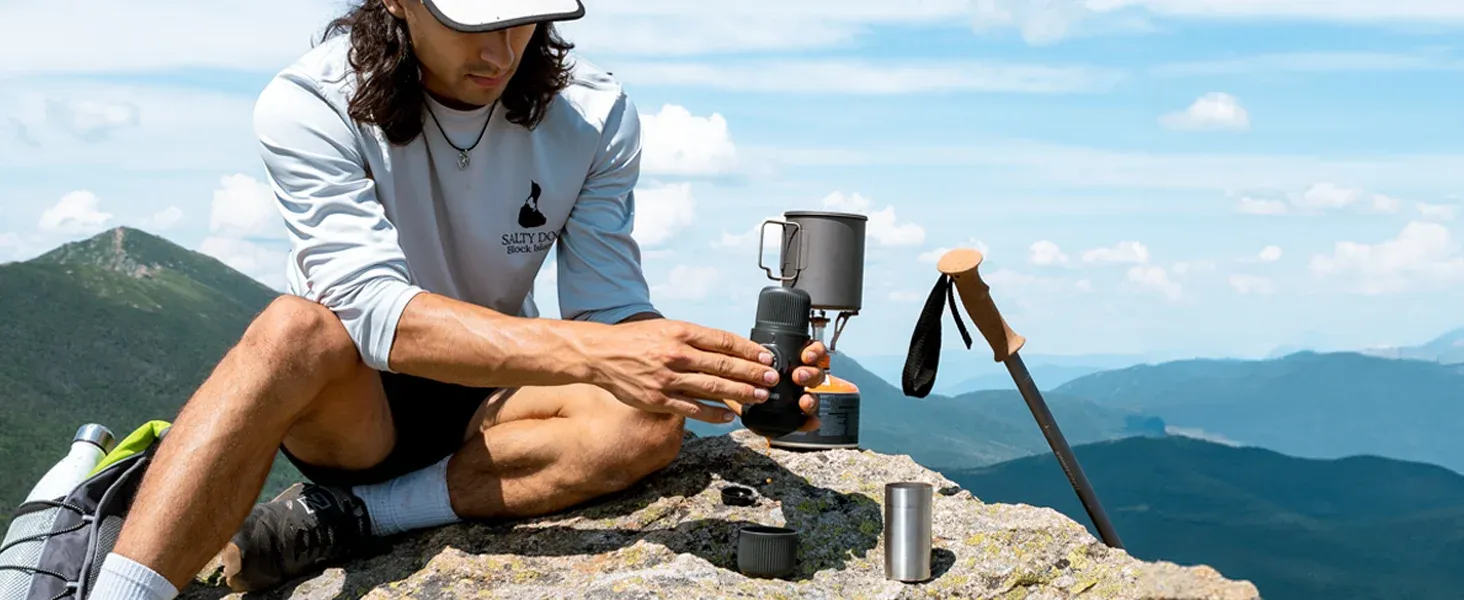
A useful portable espresso maker is the one that fits the journey, not the one with the biggest pressure number on the box. For UK camping, start with five practical questions: where hot water comes from, whether you will carry the kit, which coffee format you use, how you will clean it, and how much setup you will tolerate before the first cup.
This guide separates genuinely portable brewers from countertop automatic machines. The Delonghi Magnifica listed elsewhere on this site is a mains-powered bean-to-cup machine. It may suit a kitchen, but it is not a camping espresso maker and should not decide this shortlist.
Quick answer: which type suits your trip?
| Situation | Sensible starting type | Main compromise |
|---|---|---|
| Backpacking or rail travel | Compact hand-pumped brewer | You must carry coffee and a safe hot-water method |
| Campervan with a hob | Manual brewer or small stovetop brewer | Stovetop coffee is not always espresso-style pressure brewing |
| Hotel room with a kettle | Hand-pumped brewer designed for pre-heated water | Check the room actually permits the equipment |
| Car camping for several people | Larger manual brewer or moka pot | More parts, more water and slower cleanup |
| Home use with mains power | Countertop automatic machine | Too heavy and power-dependent for genuine travel |
For a campsite-specific checklist, read the camping coffee maker guide. For kettle-only and off-grid routines, use the travel coffee without electricity guide. Stovetop users should also compare the different method in the stovetop espresso guide.
1. Decide how you will heat water
Many products called portable espresso makers do not heat water. They only create brewing pressure. That distinction matters more than a small difference in claimed pressure.
For a campsite, count the stove, fuel, kettle, water and cooling time as part of the coffee system. Never heat a sealed brewer unless its instructions explicitly describe that method. On a hotel trip, do not assume that a travel kettle, immersion heater or open flame is permitted. A brewer that accepts water from an ordinary kettle is usually easier to plan around.
Battery-heated machines remove one step but add charging time, battery weight and a finite number of hot cycles. Treat the maker’s stated cycle count as a planning claim, not a guarantee in cold weather.
2. Compare carried weight, not product weight alone
The useful number is the complete wet kit: brewer, cup, coffee, grinder or capsules, spoon, cloth, water and heat source. A light brewer paired with a heavy hand grinder may be the wrong choice for a hillwalker, while the same setup can be perfectly reasonable in a campervan cupboard.
Before buying, pack an object of similar size and weight into the bag you actually use. Check whether the brewer has delicate protrusions, a loose scoop or a case that becomes bulky. A device that fits a product photo but not a side pocket is not meaningfully portable for that journey.
3. Choose coffee format deliberately
Ground-coffee brewers give you more control over dose and grind, but fresh espresso-style grinding adds equipment and adjustment. Capsule compatibility is convenient and tidy, yet it locks the trip to a particular format and creates more packaging. Some brewers support both only with a separate adapter.
Check the exact basket or capsule standard before ordering. “Capsule compatible” is not precise enough. If you use ground coffee, confirm the recommended dose and avoid assuming that tamping harder will fix an unsuitable grind. If you use pre-ground coffee, expect a simpler routine rather than cafe-level control.
4. Read pressure claims with restraint
A large bar figure describes part of a pump or system claim; it does not prove stable pressure at the coffee bed, correct temperature, even extraction or better flavour. Hand feel, seal condition, dose, grind and water temperature all affect the result.
Look for a repeatable method rather than a headline number. A good first-week test is simple: use the same coffee, dose, water volume and timing for three brews, change only one variable, and record what improved. Do not describe this as laboratory testing.
5. Check cleanup before you leave home
At home, make one drink and clean the device using only the water and cloth you expect to have on the trip. Count loose parts. Confirm that the basket can cool before it is opened, grounds can be removed without scattering, and seals can be inspected without tools.
On the road, hot components and pressurised chambers deserve patience. Follow the maker’s release sequence, point openings away from people, and allow parts to cool. A brewer that is pleasant for one cup but awkward for three consecutive cups may not suit a group.
A pre-purchase checklist
- Write down the journey: backpack, rail, hotel, car camp or campervan.
- Confirm whether the brewer heats water or requires pre-heated water.
- Add the weight of coffee, grinder or capsules, cup and heat source.
- Verify the exact coffee format and any adapter included in the box.
- Check serving size; “one cup” can mean very different volumes.
- Read the cleaning and pressure-release instructions before travel.
- Confirm replacement seals, baskets and warranty support are obtainable.
- Ignore scarcity counters and recheck the live price at checkout.
Portable versus countertop automatic espresso
A countertop bean-to-cup machine can grind beans, dose and brew conveniently where mains power, counter space and routine cleaning are available. The site’s actual portable option is shown on the Nanopresso portable espresso maker page. Verify its current kit, coffee-format compatibility and instructions there. A countertop automatic machine belongs in a different home-use category and should not decide a camping shortlist.
That distinction closes the main weakness of the previous version of this page: a camping guide should not call a countertop automatic machine portable simply because both make coffee.
Frequently asked questions
Do portable espresso makers heat their own water?
Many manual models do not. Check the instructions for the exact model and include a safe kettle or stove in your plan. Battery-heated models need their own charging and cycle-count check.
Is a higher bar figure always better?
No. A headline pressure claim alone does not establish temperature control, repeatability or cup quality. Judge the complete brewing method and the evidence supplied for the exact model.
Are capsules better for camping?
They can reduce mess and remove the grinder, but compatibility must be exact and used capsules still need to be carried out. Ground coffee offers flexibility at the cost of more preparation.
What is the best portable espresso maker for UK camping?
There is no honest universal winner. The right type is the smallest complete system that matches your heat source, carrying limit, coffee format, serving count and cleanup conditions.
Bottom line
Choose the system, not the slogan. For most campers that means a compact manual brewer plus a planned hot-water method; for hotel travel it means a kettle-compatible routine; and for home use it may mean accepting that a countertop automatic machine is a different category entirely.